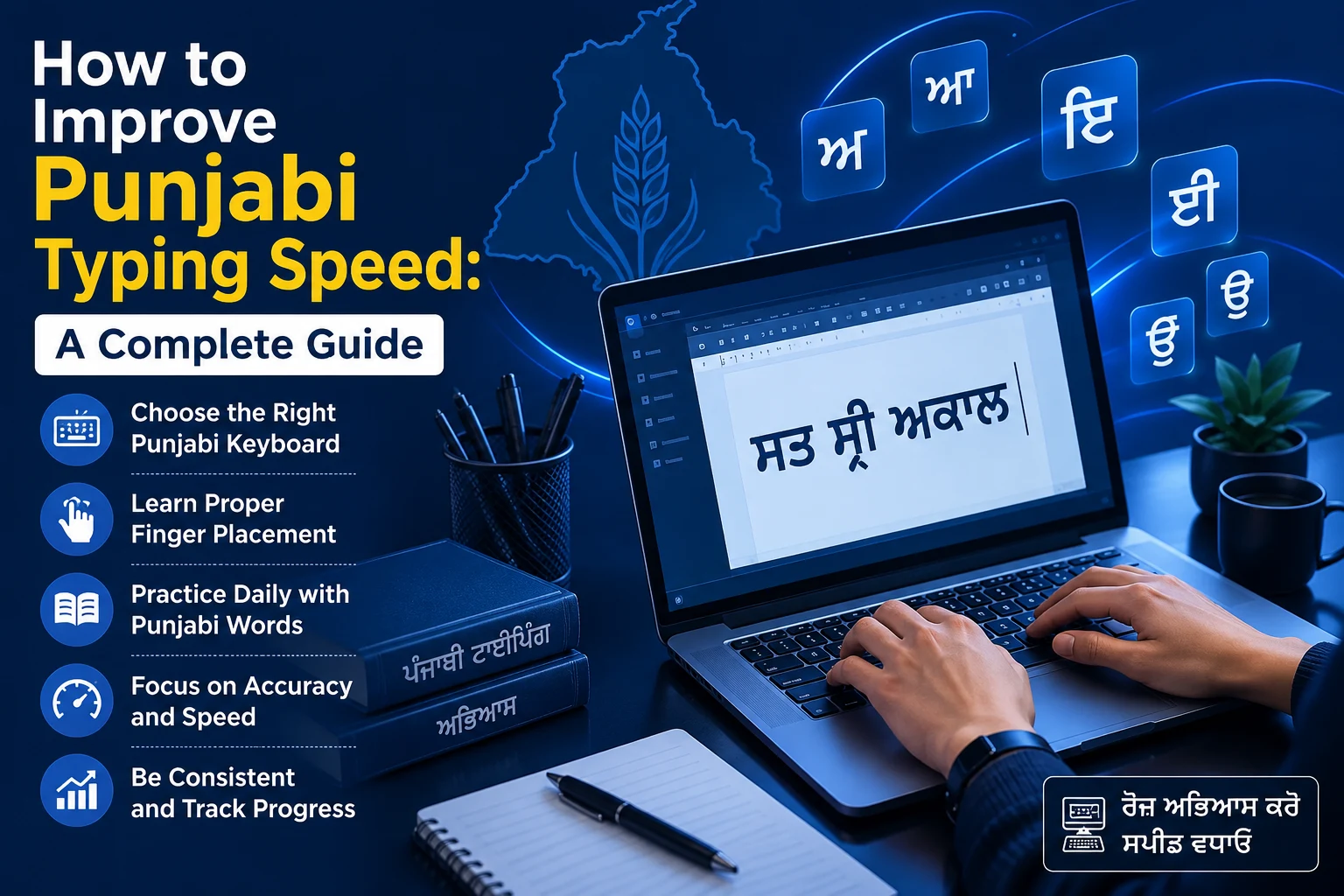
Punjabi typing is an important computer skill for students, office workers, data entry operators, and candidates preparing for government examinations in Punjab. Whether you want to learn Punjabi typing for personal use, office work, or competitive exams, developing good typing skills can make your work easier and faster.
Many beginners find Punjabi typing difficult because they are unfamiliar with the keyboard layout, Gurmukhi characters, and typing combinations. However, learning the correct method and practising regularly can help you improve your typing speed and accuracy.
In this guide, you will learn how to start Punjabi typing, develop better typing habits, avoid common mistakes, and improve your performance through regular practice.
1. Understand the Punjabi Typing Keyboard Layout
The first step in learning Punjabi typing is understanding the keyboard layout. Before starting paragraph practice, become familiar with the location of Punjabi characters on your keyboard.
Punjabi is commonly written using the Gurmukhi script. Learning the position of its characters will help you type without continuously searching for individual keys.
Spend some time understanding the keyboard layout and practise a few characters every day. Once you become comfortable with the key positions, typing will become easier.
2. Learn Gurmukhi Characters and Matras
Punjabi typing requires knowledge of Gurmukhi letters and vowel signs called matras. Beginners should learn these characters before moving towards long paragraphs.
Start by practising basic Punjabi letters and gradually learn how to type different matras and character combinations.
Regular practice will help you recognise characters more quickly and reduce typing mistakes.
3. Start with Simple Punjabi Words
Do not begin with difficult paragraphs when you are learning Punjabi typing. Start with short and commonly used Punjabi words.
Practise words that you frequently use in daily conversations. Once you become comfortable typing individual words, move towards longer words and complete sentences.
This step-by-step approach helps beginners develop confidence and better keyboard control.
4. Practise Punjabi Sentences Every Day
After learning individual characters and words, start practising complete Punjabi sentences.
Sentence practice helps you understand how different characters work together. It also improves your typing flow and prepares you for longer typing exercises.
Try typing different types of Punjabi sentences instead of repeating the same content every day.
5. Focus on Accuracy Before Speed
One of the biggest mistakes beginners make is trying to type too quickly. Typing at high speed without proper accuracy can increase errors and affect your overall performance.
Initially, focus on typing the correct characters and words. Once you become comfortable with the keyboard, gradually increase your typing speed.
Remember that accurate typing is more useful than fast typing filled with mistakes.
6. Take Regular Punjabi Typing Tests
Online Punjabi typing tests are a useful way to measure your typing performance. They help you understand your current speed and accuracy.
Take regular timed typing tests and compare your results. If you notice that certain words or characters are causing problems, spend additional time practising them.
Regular tests also help you become familiar with time-based typing examinations.
7. Follow a Daily Punjabi Typing Practice Schedule
Consistency plays an important role in improving typing speed. Practising for a short time every day can be more effective than practising for several hours occasionally.
Here is a simple daily practice routine for beginners:
| Practice Activity | Time |
|---|---|
| Gurmukhi character practice | 5 minutes |
| Punjabi word practice | 5 minutes |
| Sentence typing | 5 minutes |
| Punjabi paragraph typing | 5 minutes |
| Total Practice Time | 20 minutes |
Follow this routine regularly and increase the practice duration as your skills improve.
8. Avoid Looking at the Keyboard
Looking at the keyboard repeatedly can slow down your typing speed. Try to remember the position of the keys and focus on the computer screen while typing.
At the beginning, this may feel difficult, but regular practice will help you become more familiar with the keyboard.
9. Practise Different Punjabi Paragraphs
Typing the same paragraph repeatedly may not expose you to different words and character combinations.
Choose paragraphs on different topics, such as education, technology, daily life, Punjab, and general knowledge.
Practising different content will help you improve your typing flexibility and prepare for longer typing tasks.
10. Track Your Punjabi Typing Progress
Checking your progress is important because it helps you understand whether your practice routine is working.
Maintain a record of your typing test results, including:
-
Words per minute (WPM)
-
Typing accuracy percentage
-
Total mistakes
-
Time taken to complete the test
Compare your results every week. This will help you identify improvements and areas that need more attention.
11. Common Punjabi Typing Mistakes to Avoid
Beginners often make mistakes that affect their typing performance. Some common mistakes include:
-
Typing without learning the keyboard layout.
-
Confusing similar-looking Punjabi characters.
-
Making mistakes while entering matras.
-
Trying to increase speed too quickly.
-
Practising without a fixed routine.
-
Ignoring typing accuracy.
-
Not taking regular typing tests.
Avoiding these mistakes will help you develop better typing habits.
12. Why Is Punjabi Typing Important for Government Job Preparation?
Punjabi typing skills can be useful for candidates preparing for various government and clerical positions where Punjabi typing is required.
Candidates should become familiar with the required keyboard layout and practise according to the examination pattern. Timed typing exercises can help improve speed, accuracy, and confidence.
Before preparing for an examination, always check its official notification for the required typing language, keyboard layout, speed criteria, and other instructions.
Frequently Asked Questions About Punjabi Typing
Q1. How can I improve my Punjabi typing speed?
Practise Punjabi typing daily, learn the keyboard layout, focus on accuracy, and take regular online typing tests.
Q2. How much time should I spend practising Punjabi typing?
Beginners can start with 15 to 20 minutes of daily practice. You can gradually increase the duration as your typing skills improve.
Q3. Is Punjabi typing difficult for beginners?
Punjabi typing may feel challenging initially because of Gurmukhi characters and matras. However, learning the keyboard layout and practising regularly can make it easier.
Q4. How can I check my Punjabi typing speed?
You can use an online Punjabi typing test to measure your typing speed and accuracy. Regular tests help you monitor your improvement.
Q5. Is Punjabi typing useful for government exams?
Yes. Punjabi typing is useful for government and clerical examinations where Punjabi typing skills are part of the eligibility or selection process. Requirements vary by recruitment notification.
Q6. Should I focus on speed or accuracy first?
Beginners should focus on accuracy first. Once they become comfortable with the keyboard, they can gradually work on increasing their typing speed.
Conclusion
Learning Punjabi typing is a valuable skill for students, job seekers, and working professionals. The best way to improve is to understand the Gurmukhi keyboard layout, practise characters and words, type complete paragraphs, and take regular typing tests.
Do not expect immediate results. Give yourself enough time to learn and practise. Even 20 minutes of consistent daily practice can help you develop better typing habits.
Start practising Punjabi typing today with TypingTestOnline.in. Improve your typing speed, check your accuracy, and track your progress with regular online typing tests.
Put these Punjabi typing tips into practice: Take the Punjabi Typing Test and check your speed and accuracy.